LLC, S-Corp, or Sole Proprietor? Choosing a Business Structure as a Content Creator
For a new content creator, choosing a business structure can feel premature.
At the beginning, the business may consist of nothing more than a social media account, a phone, a camera, a few brand deals, and payments arriving through platforms such as YouTube, TikTok, Instagram, or directly from advertisers.
But as income grows, the business becomes more complicated. A creator may begin receiving:
- Brand sponsorships
- Affiliate income
- Platform revenue
- Appearance fees
- Production fees
- Licensing income
- Digital product sales
- Consulting income
- Merchandise revenue
- Gifts or products from brands
- Travel or event compensation
At that point, the question is no longer simply “How do I report my income?”
It becomes: “What business structure makes sense for the business I’m building?”
For many creators, the choice eventually comes down to operating as a sole proprietor, forming an LLC, or having an LLC or corporation taxed as an S corporation.
There is no single structure that is automatically best for every content creator. The right choice depends on income, profitability, liability exposure, administrative costs, state requirements, business plans, and—particularly for an S corporation—the amount of profit that may reasonably remain after paying the owner compensation.
Sole Proprietor: The Simplest Starting Point
A content creator who operates a business without forming a separate legal entity is generally operating as a sole proprietor for federal tax purposes. This can be appropriate when someone is just testing an idea or generating relatively small amounts of business income.
For example, imagine a creator begins posting videos as a side business. During the first year:
- Brand income: $12,000
- Affiliate income: $3,000
- Platform income: $5,000
- Business expenses: $8,000
The creator may have approximately $12,000 of net business profit.
Creating a complicated business structure may not provide enough benefit to justify additional administrative work at this stage. The creator can generally report the business activity on Schedule C with the individual tax return and pay applicable income and self-employment taxes.
The advantage is simplicity.
But simplicity has limitations. As the business becomes more profitable or the creator takes on more contractual and financial risk, the creator may want to consider whether a separate legal entity makes sense.
What Does an LLC Actually Do?
An LLC is a legal entity, not automatically a special federal tax classification. This distinction is extremely important.
A single-member LLC is generally treated as a disregarded entity for federal income-tax purposes unless it makes an election to be taxed differently. That means: Forming an LLC does not automatically create S-corporation tax treatment.
A creator can have: LLC → taxed as sole proprietorship
or potentially: LLC → taxed as S corporation
Those are different tax situations even though both businesses may legally be LLCs.
Why Creators Consider an LLC
Liability protection is often one of the reasons creators consider forming an LLC.
A creator’s business may involve contracts, sponsored content, intellectual property, equipment, employees or contractors, events, travel, and relationships with advertisers. For example, imagine a creator produces sponsored videos for several companies. The creator also:
- Hires freelance editors
- Contracts with photographers
- Travels for promotional events
- Licenses content
- Signs advertising agreements
As the business grows, the potential business liabilities grow as well.
An LLC may provide a legal separation between the business and its owner, although liability protection is not absolute and depends on state law, proper entity maintenance, contracts, insurance, and the circumstances of a particular claim.
An LLC should therefore not be viewed as a substitute for appropriate business insurance or sound contracts.
An LLC Does Not Automatically Save Taxes
This is one of the most common misconceptions. A creator might hear: “If you make money online, you should form an LLC because it will reduce your taxes.”
That is not necessarily true. If a single-member LLC is taxed as a disregarded entity, forming the LLC by itself generally does not transform the owner’s business income into S-corporation income.
The creator may still report the business income on the individual return and may still owe self-employment tax on the net earnings.
The potential tax-planning discussion comes when the business considers an S-corporation election.
What Is an S-Corporation?
An S-corporation is a federal tax election, not simply another type of state business entity.
An LLC can potentially elect to be taxed as an S-corporation if it meets the applicable requirements. A corporation can also elect S-corporation status if it qualifies.
For creators, the important issue is that an S-corporation changes how compensation and business profit can be treated for tax purposes.
An owner who performs services for an S-corporation generally needs to receive reasonable compensation before taking non-wage distributions.
This is where S-corporation planning becomes more complicated.
Why the S-Corp Election Can Be Attractive to Content Creators
Suppose a creator operates a profitable business.
After ordinary business expenses, the business generates $180,000 of net profit before owner compensation.
The creator performs the work personally.
Rather than treating the entire amount in the same way as sole-proprietor income, an S-corporation may allow the business to divide the owner’s economic return between:
- W-2 wages, and
- Potential shareholder distributions
subject to the applicable rules.
The potential advantage comes from the fact that properly structured S-corporation distributions generally are not subject to Social Security and Medicare taxes in the same manner as wages. But that does not mean an owner can simply label most of the profit as a distribution.
Reasonable Compensation Is Critical
The IRS requires an S-corporation to pay reasonable compensation to shareholder-employees for services they provide to the corporation. This is especially important for content creators because the owner is often the central income-producing asset of the company. The creator may be:
- Writing scripts
- Appearing on camera
- Negotiating brand contracts
- Producing content
- Editing videos
- Managing social media
- Developing creative concepts
- Attending promotional events
It would be difficult to justify a structure where the creator performs essentially all of the work but receives an artificially small salary and takes almost everything else as distributions.
Example: Why “Just Pay Yourself $30,000” Is Not a Strategy
Suppose a creator’s S-corporation earns $250,000 of business profit before owner compensation. The owner performs nearly all of the services.
The owner decides to pay themselves $30,000 salary and take $180,000 distribution while leaving the rest in the company. Simply calling $30,000 “salary” does not automatically make it reasonable. The appropriate compensation analysis depends on the facts, including the nature of the services, the creator’s role, time spent, comparable compensation, business circumstances, and other factors.
An S-corporation should not be used simply as a mechanism to minimize payroll taxes without considering reasonable compensation.
The S-Corp Break-Even Question
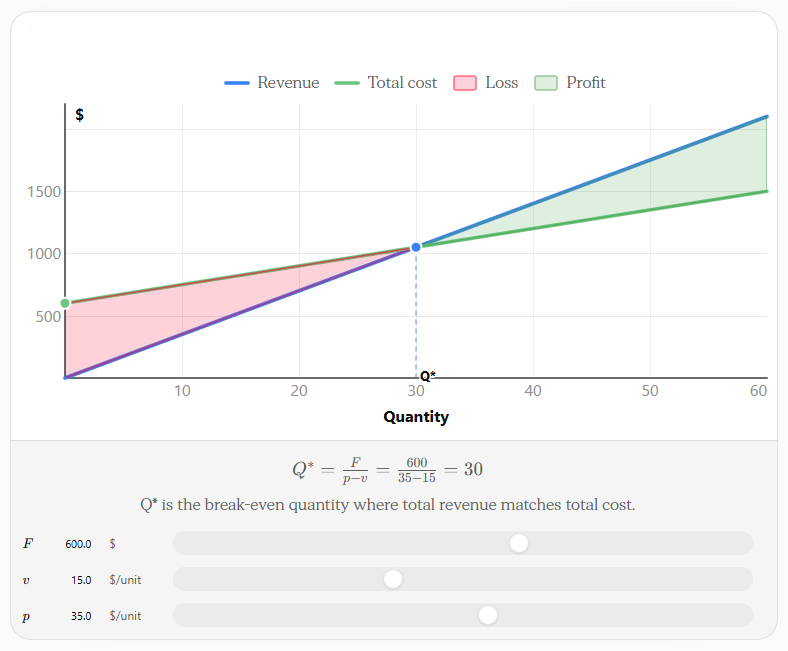
This is the question many creators should ask before making an S-corporation election: Will the potential tax savings justify the additional cost and administrative complexity?
An S-corporation generally creates additional responsibilities. These may include:
- Payroll
- Payroll tax filings
- W-2 preparation
- Separate business tax return
- Corporate accounting
- State compliance
- Reasonable compensation analysis
- Additional bookkeeping
- Separate bank accounts
- Corporate recordkeeping
There can also be state-specific taxes and fees.
For a California creator, the analysis should include California-specific requirements and costs rather than relying solely on a federal tax calculation.
A Simple Break-Even Example
Suppose a creator is considering an S-corporation election. The business produces enough profit that the potential payroll-tax savings could be meaningful. But the creator expects additional annual costs for:
- Payroll processing
- Tax preparation
- Accounting
- State compliance
- Corporate administration
If those additional costs consume most of the potential tax benefit, the election may not make economic sense. On the other hand, if the business has substantial recurring profit and the potential tax savings significantly exceed the additional costs, an S-corporation election may deserve serious consideration.
The exact break-even point is different for every business.
Our firm provides the information in this e-newsletter for general guidance only, and does not constitute the provision of legal advice, tax advice, accounting services, investment advice, or professional consulting of any kind. The information provided herein should not be used as a substitute for consultation with professional tax, accounting, legal, or other competent advisers. Before making any decision or taking any action, you should consult a professional adviser who has been provided with all pertinent facts relevant to your particular situation. Tax articles in this e-newsletter are not intended to be used, and cannot be used by any taxpayer, for the purpose of avoiding accuracy-related penalties that may be imposed on the taxpayer. The information is provided "as is," with no assurance or guarantee of completeness, accuracy, or timeliness of the information, and without warranty of any kind, express or implied, including but not limited to warranties of performance, merchantability, and fitness for a particular purpose.